22 December 2009
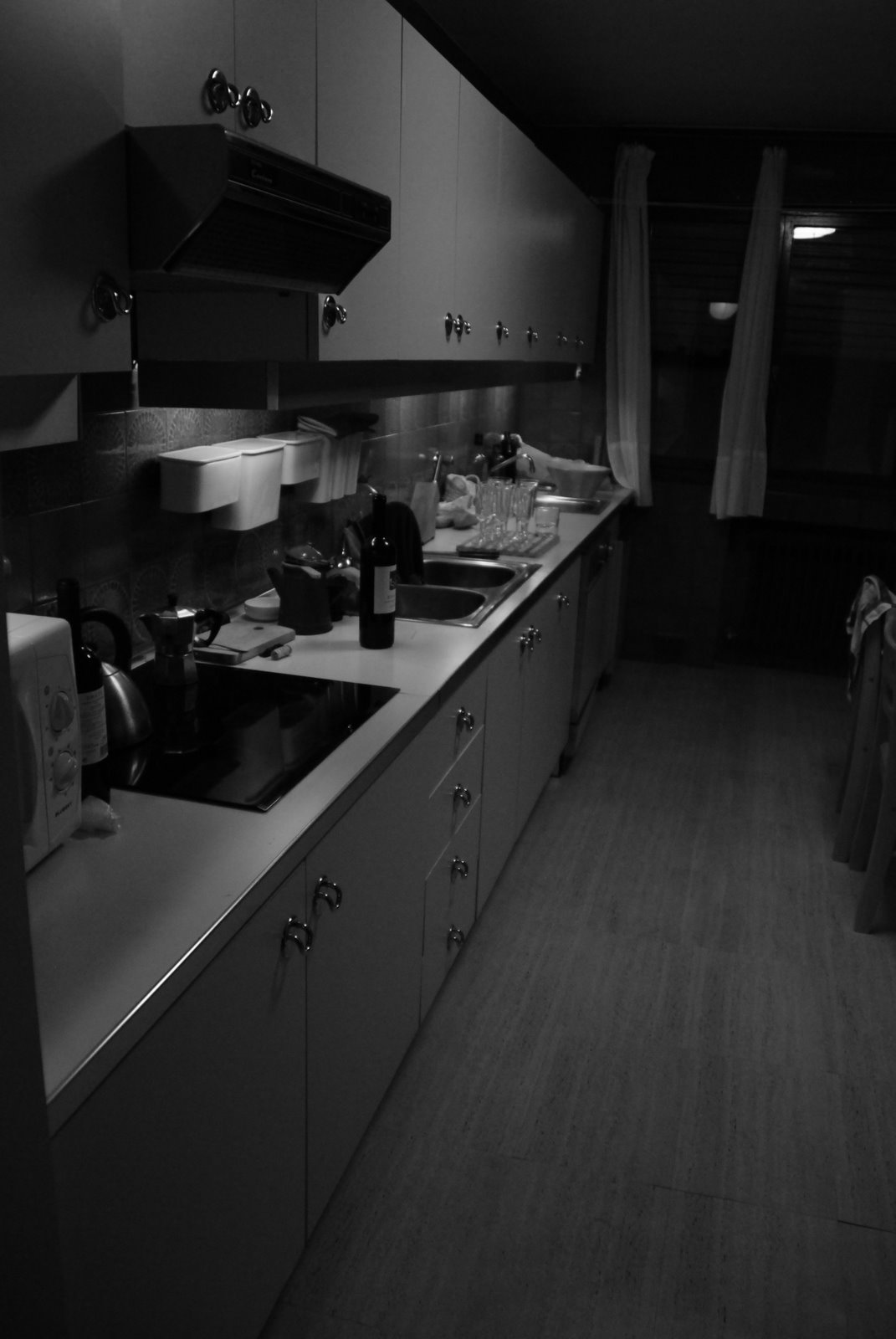 Although it hadn't felt particularly christmassy (maybe we're just used to the three month build up you can get in the UK when the shops fill with decorations in October and certain parts of the brainstem are directly targetted by Slade or, worse, Shakey) Liz had expressed a desire to have a few folk round for some nibbles and a glass of wine.
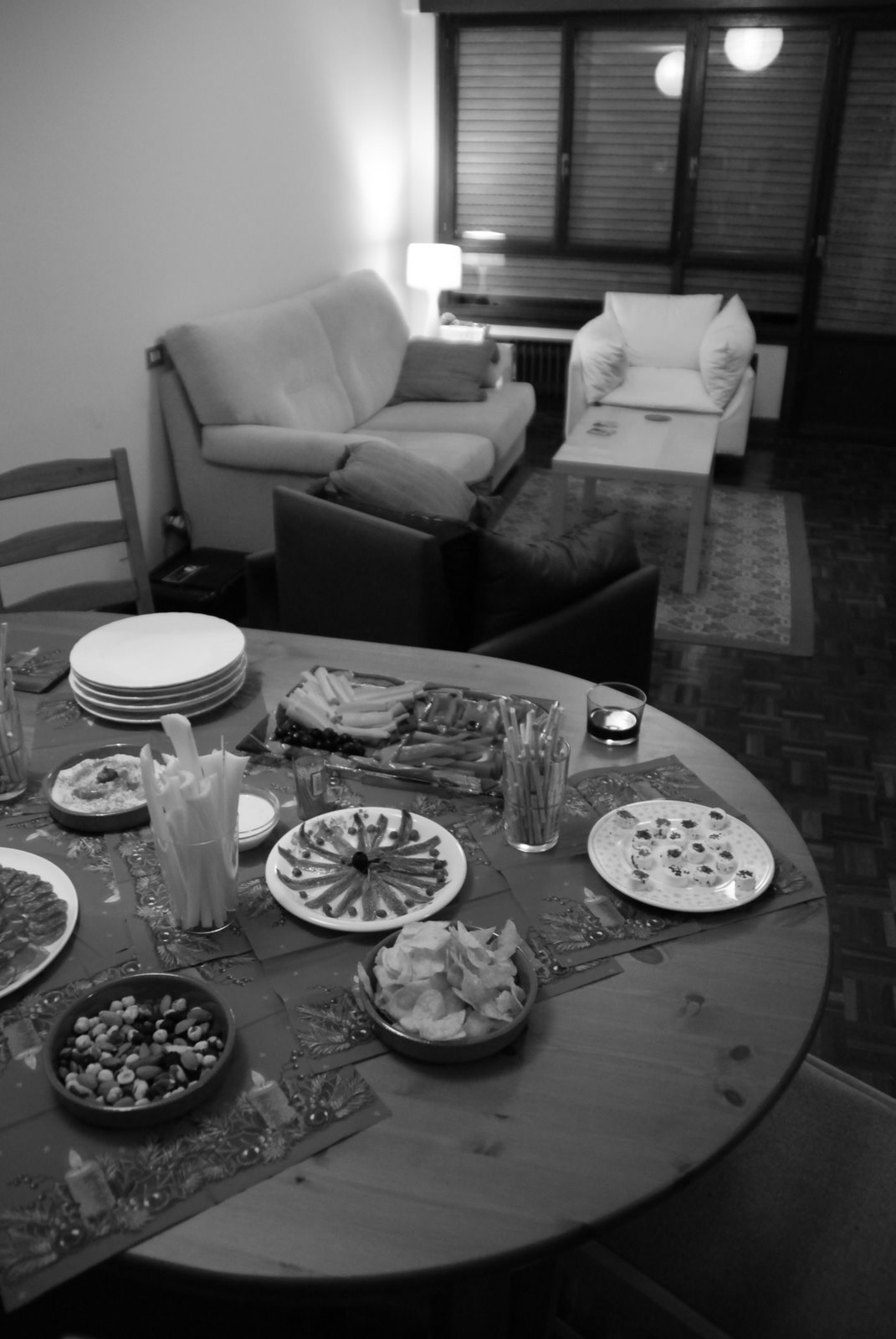 MJ (aka Maria Jesús) had previously suggested going out dancing so we decided to combine the two and show off the new flat too.
Liz also bought me a Spanish scrabble set (which includes tiles for "ch" "rr" "ll" and "ñ") so we thought we might play that too.
We did a fairly standard table full of cold meats, cheese and dips... we even managed to find some humous. What we didn't know is that dipping is not spanish, and there were a couple of comments along the lines of "what's this raw carrot for?" In fact, on the humous pack it said "para dipear" which is a hispanicization of 'to dip' leading to a discussion about what dip is in Spanish (meter, we decided).
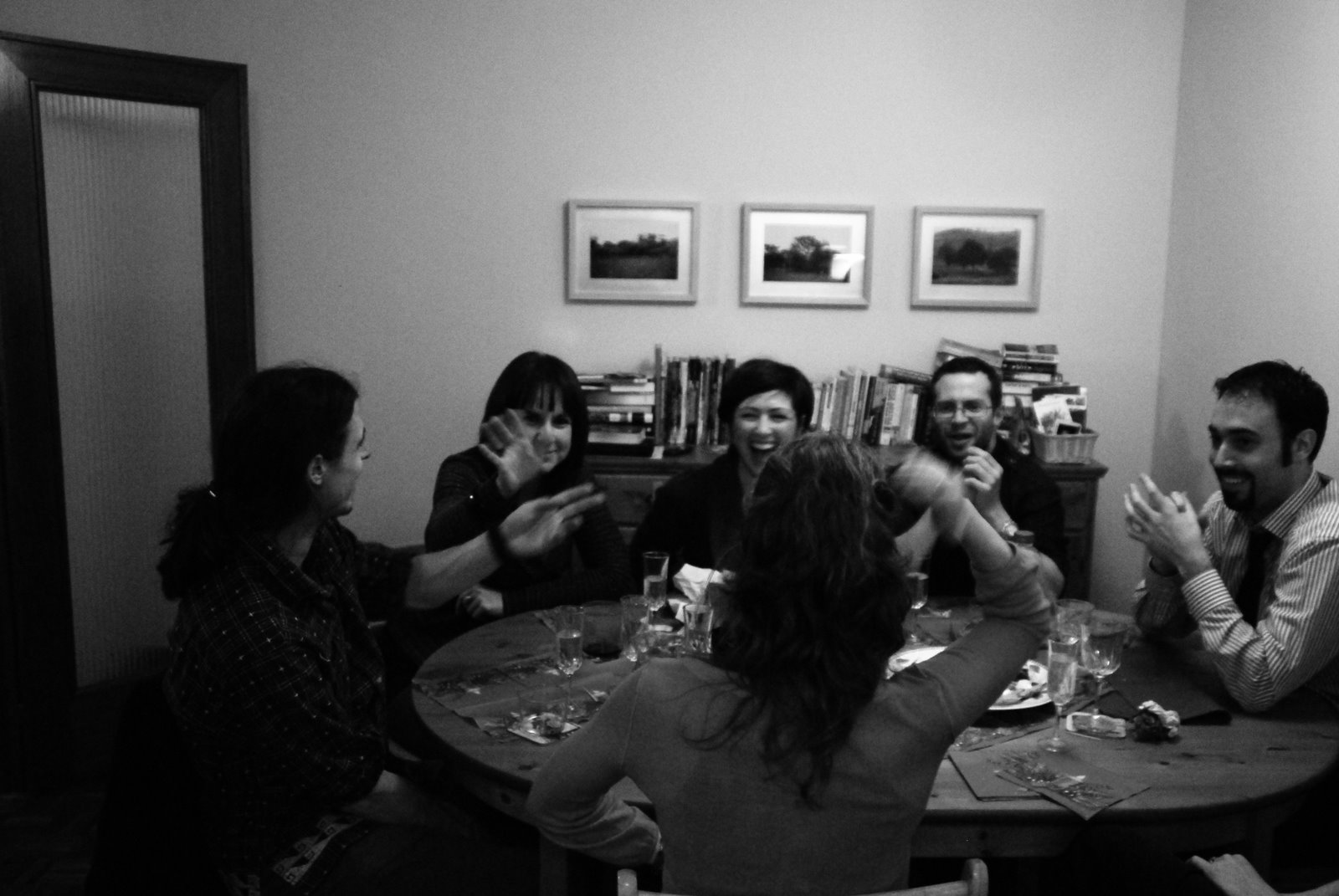
So we dipped, we snacked, we drank wine and toasted a merry christmas. Then at midnight we all trooped out into the chill (-6C, nothing compared to a frosty Yorkshire I know) and off to Rock Circus.
Rock Circus is basically the hard rock cafe, without the eating. As we went in they were playing AC/DC or some such. Saul excitedly recognised Led Zep, I didn't... and as such, suffered a dent in my muso reputation. Liz demonstrated a fine solo mosh to the new UK crimble number one (which I didn't recognise either) and drew a few admiring comments from the chaps next to us.
And therein lies the problem with Rock Circus (or lay, because I don't know if it's always like that). The average age of the clientele went down when we went in...
After a drink in there we toddled off to Morgana Le Fey, where they played much less recognisable music (made no difference to me), more europoppy, a younger crowd, more noise...
We made our excuses at around 3 and headed home becuase the following day we were up at 7:30 to go walking...
Never got round to the scrabble.

Labels: asturias, food, oviedo
¶ 1:46 PM 1 comments

11 December 2009
Camino Primitivo, part 5: Berducedo to Grandas de Salime
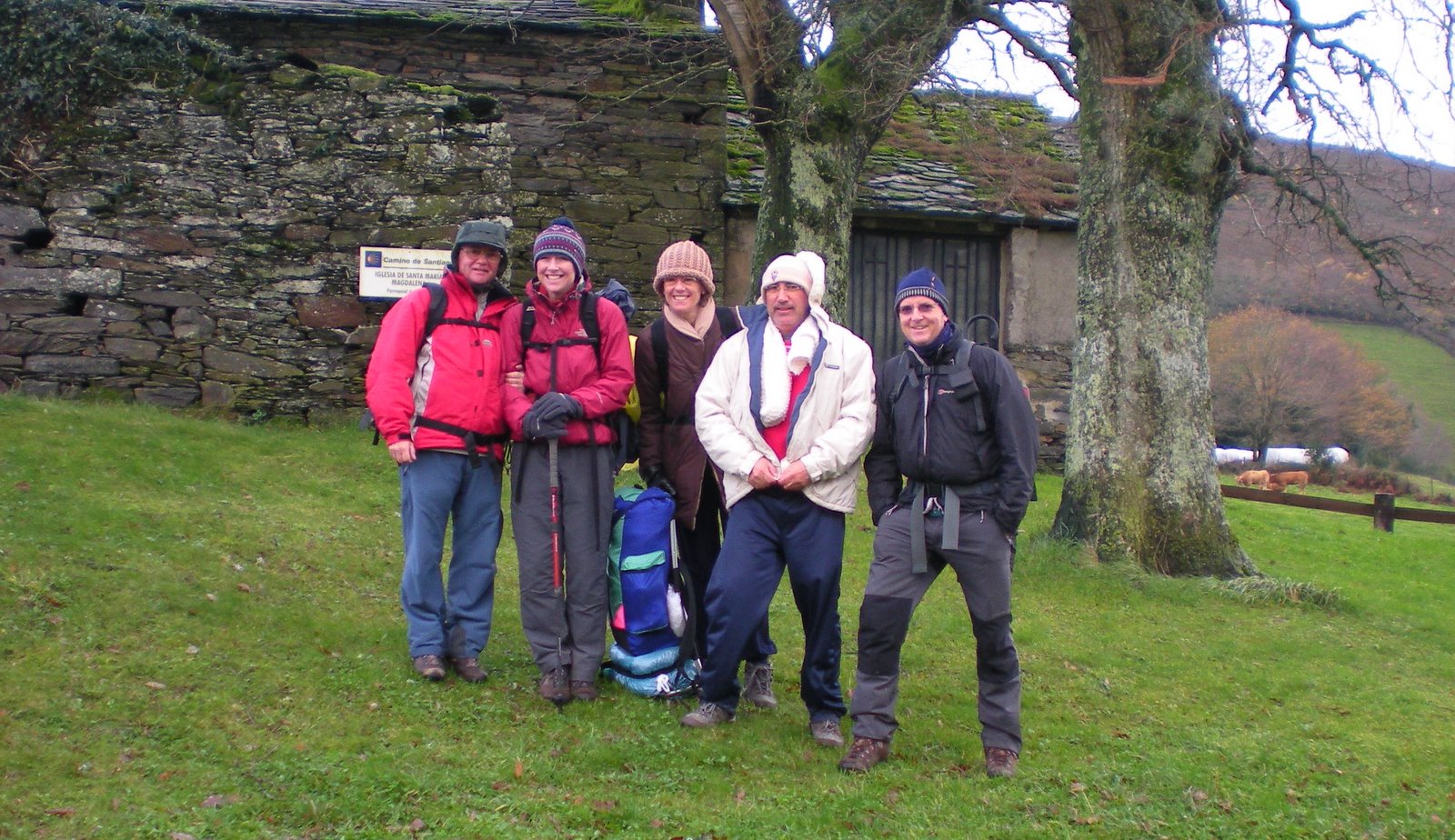
 Julio had been trying to convince us to take it easy on the third day and get to Grandas a bit later. This would have meant missing the only bus back and having to wait until 3pm the following day for a bus. So we were reluctant. As it was, the weather had eased a little, and we decided to get going earlyish to take advantage of the lack of rain. This meant we left Berducedo before the bar had opened. Never mind, we thought, there's going to be somewhere to get a coffee between here and there.
There wasn't.
We passed La Mesa, a hamlet with 13 people, all asleep, stopping in the albergue there to see if there was a jar of nescafe or something similar.
No.
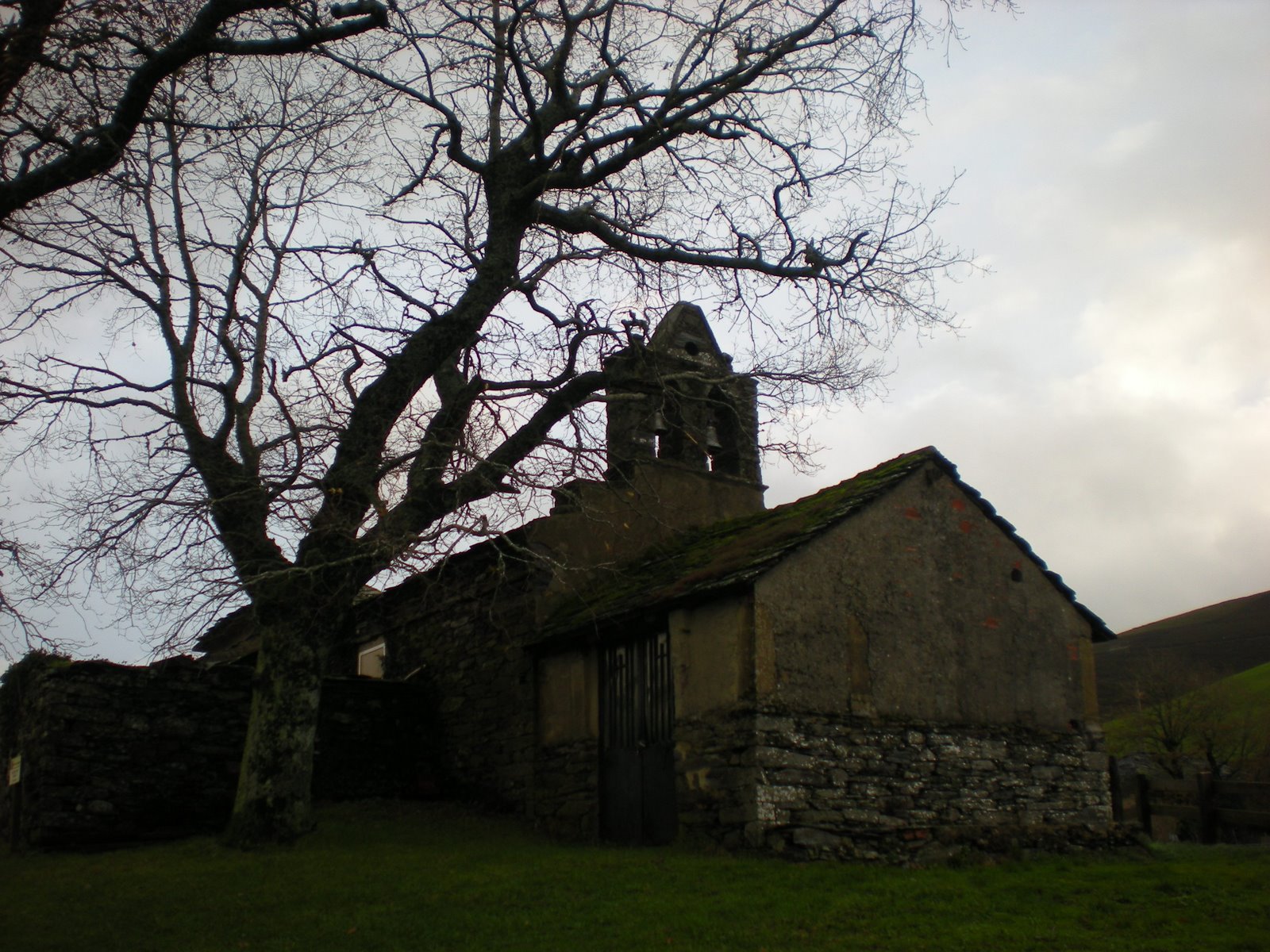
Then we climbed steeply up, into real north of England territory, smoother hills, heather and a fierce cold wind. The houses here have slate roofs and are a dark grey that wouldn't look out of place in Kendal. At the top we could see our destination, Grandas de Salime. Doesn't look too far, we thought, maybe 5km in a straight line. Then we saw a sign that said 14km. There was a long descent punctuated by plaintive cries for coffee...
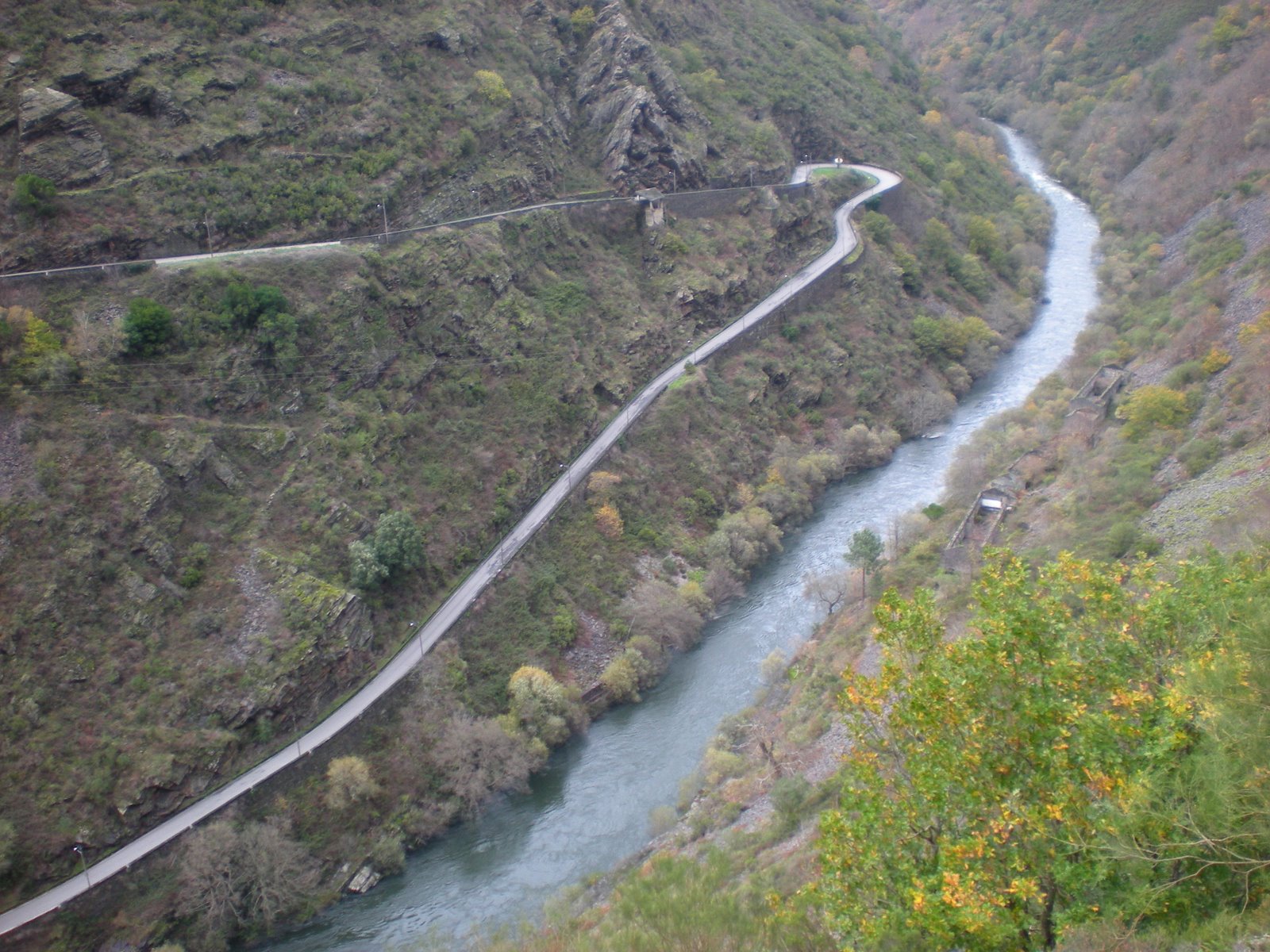
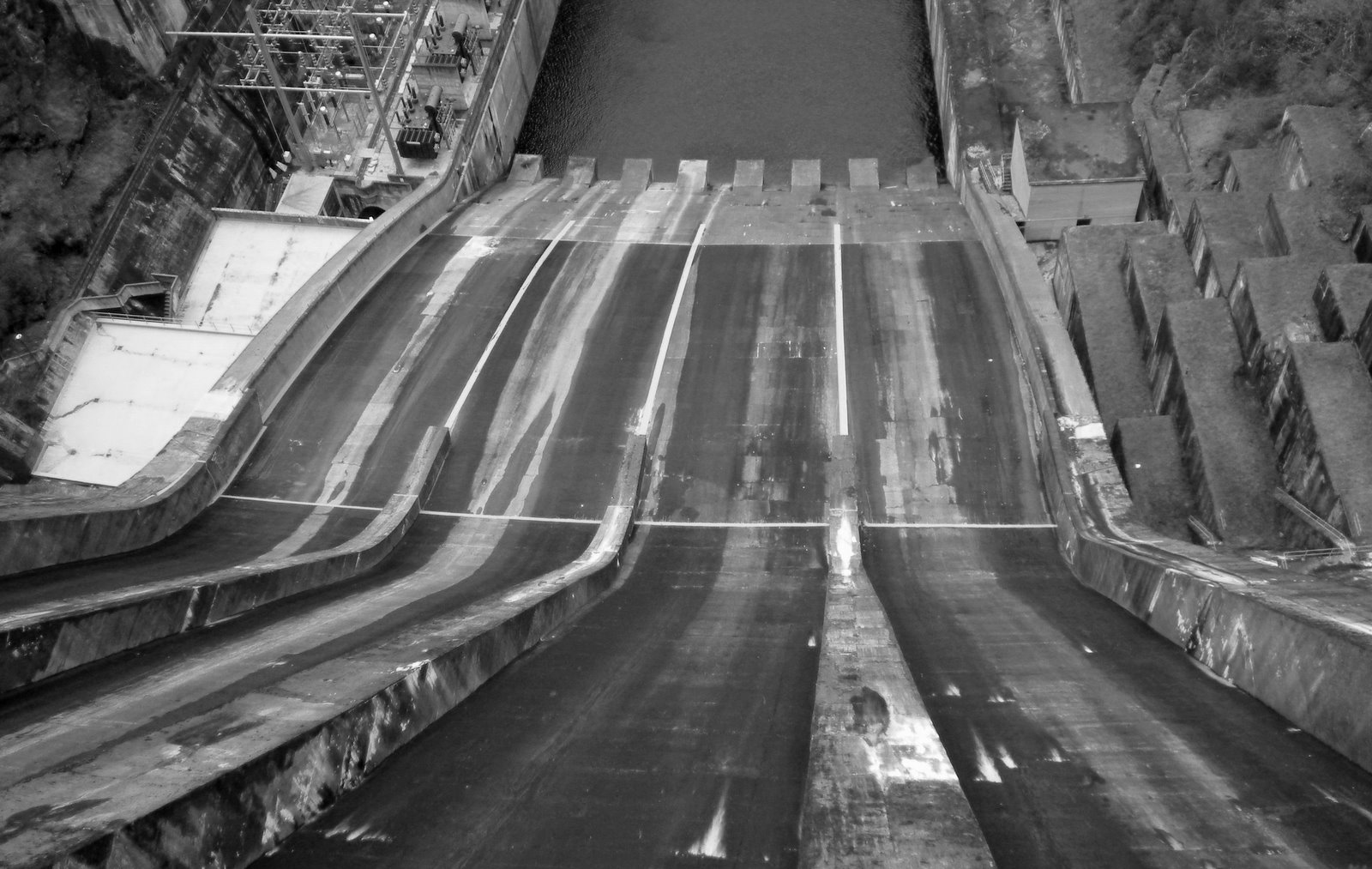
It was stunning scenery, the hills are big, 1200m and steep sided, plunging to a man made lake before rising on the other side the same way. The path wandered through pine forest then oak and chestnut, so we had all of the colours of autumn. We descended as far as the dam that forms the lake, it's a big piece of engineering and when you get up close you're knackered from the descent, and it seems even more impressive.
We'd spotted a building as we were descending and Julio had said it was a bar (well he actually said to Enrique that we'd be there in 15 minutes, an hour and a half out... not too bad). So we were hoping to finally have our first coffee of the day at about 1pm. It wasn't just closed, it was abandoned.
Enrique and Encarna decided to stop there for some butties and we said our farewells. We were hoping to make it to the town in time to have lunch before the bus back. Which we did after a strength-sapping 6km up the hill.
Grandas de Salime has 500 inhabitants, it's the capital of the middle of the back of beyond nowhere. Still, it has a couple of rather nice restaurants, we blagged a table and in contrast to the majority of diners, who were in their Sunday best (although it was Monday), we piled rucksacks and sticks at the side of the table and set to eating. A chickpea stew followed by (merluza for Liz) slices of hand (I think that's the name for the cut in English butchers, in Spanish codillo, which is little-elbow, basically the forearm). We ate heartily, there is no other word for it, and even had time for coffee before getting on the bus for a 3.5 hour drive back.
On which we were able to actually see some of the hills we'd walked over, unlike the day before.
Labels: asturias, camino primitivo, food, walking
¶ 1:39 PM 1 comments
10 December 2009
Camino Primitivo part 4: Borres to Berducedo
 Liz was awake at 6, she said, listening to the wind. The rest of us got up around 8 and got everything ready. The wind had died down a little bit but Enrique (one half of the Valencian couple, the other being Encarna) said it was still raining. I dithered between umbrella and waterproofs, eventually opting for waterproof trousers and umbrella combo which would avoid overheating. I had a new umbrella for walking, a huge aluminium thing, light but sturdy enough to cope with the wind.
It bucketed down.
We walked to a village called La Mortera, where there was, surprisingly, a bar (you may be getting an idea of what kind of pilgrimage this is by now... it's a pub crawl... a very loooong pub crawl). It was another bar-tienda (the combination of bar and village shop with all the stock on shelves, they sold everything from soap to slippers, blankets to tins of peaches. The bar owner seemed happy to have so many customers and busied herself making coffee. Enrique suggested a chupito, so we had an orujo that the landlady said was made by one of the local chaps, yes, moonshine. She stamped our credentials and we waited to see if the rain would let up.
No.

So it was off again, this time to Pola de Allande, another bigish town (for very small, Asturian values of big). We arrived at lunchtime and had a big blowout meal. The rain let up a little bit and the sun came out for all of five minutes. While we were inside.
Full, we decided to do the next part. A climb up to Puerto del Palo (puerto means pass in the mountains), which had a reputation of being a bit tough for pilgrims. Julio suggested that we stop at an albergue after a couple of km, but we were thinking of how we were getting home, one bus a day, and we thought we should press on. We stopped in a bar after a few more kilometres. Here in the deeps of Asturias the bars are full of pictures of hunters on the walls, proudly posing above boar corpses. The bar was full of hunters complaining about the weather and worryingly combining drinking with walking around with shotguns. There were a few raised eyebrows when we said where we were going.
We trudged through the rain up the road for a couple of hours, and then took the path as it left the road to head straight up while the road did a few hairpins which would have added another 4km to the route. The path was basically a stream, which made it easy to follow at least.

We got to the top in the murk, fog, twilight, wind... it was very Yorkshire. The light was going and there was another 8km to the albergue. We passed a tiny slate chapel and a hamlet of three housed, pointed in the right direction by an umbrella wielding farmer (if you take a wrong turn doing the camino, local people notice and soon set you straight, although on this day, a couple of people I asked were in the middle of slaughtering pigs, elbow deep in offal, which made pointing a challenge).We couldn't see very much, so we just walked on. 8km, two hours, a village with a bar in 4km, but would it be open... I put my mp3 player on and listened to Melvyn Bragg on Sparta and the discovery of radiation while we walked, it was hard to chat with the drumming of the rain on the umbrella, yes, it was still raining.
We got to the tiny village of Lago and had a coffee at the bar, 4km left to the albergue. Pitch black now, so head torches out and single file to present a smaller target to the traffic. When we reached the albergue, it was occupied by a solitary walker from Mallorca who had put the heating up to maximum on all the radiators. Handy because we were all pretty damp. There were wet sleeping bags, boots, socks, clothes... Enrique, Julio and I went down to the bar (the voluntary donation was, well, not very voluntary here) to pay and Julio rang his wife (it was their 40th wedding anniversary). Then back up to the sauna that the albergue had become and an attempt to sleep.

Labels: asturias, camino primitivo, walking
¶ 3:21 PM 0 comments
09 December 2009
Camino Primitivo part 3: La Espina to Borres 32km


We resumed our little stroll in La Espina, an hour and a half by bus from Oviedo, ready for a big weekend of walking. The path ran parallel to the road, through green, Yorkshire looking territory. La Espina is on top of the hills and there are dozens of windmills up here failing to spoil the view. After a while we passed one of the standard Camino signs, but this one had the word 'bar' in big letters, so we followed the arrow... rude not to.
The bar was called El Coxu, which is Asturian for the Limper, as the original owner was a guy with a limp. It looked like there was no one about, the bar was dark, but a woman appeared (as if by magic, for all the Mr Benn fans) and served us a morning warmer (anise de guindas, basically unsweetened anise with fruit and sugar added before being kept for a year unopened). Fortified, we carried on to Tineo, the biggest town hereabouts, which isn't saying much. It's up on the side of a hill and the buildings have a patina of grime that suggests they've endured a fair amount of damp, ugly weather. We took the advice of a couple of people we'd spoken to and ate in La casina (lit: littel house, and it was, literally a little house) where, to Julio's dismay, they weren't serving the boiled meats he was hankering after, instead it was a plate of grilled cheek with salad and chips. Cheek? you say, well yes, cheek, mmmm tender face meat.
After dinner the rain started. I'll not mention it too much more except to note that it didn't stop until two days later.
After Tineo we contoured the mountain, and were stopped by a hail from a bearded, weatherbeaten chap. He claimed to be the last of the filipinos, which he said, meant that his family fought in the Philipine wars (Spains last overseas sally). He seemed to sit in his shed and wait for pilgrims, then confuse them about what was open, the distances of the stages and so on. He did give us a guide to the camino though. He claimed he sat out all day for the air (his house was a few hundred metres down in the valley) but then went and ruined it all by smoking cigars non stop.
We walked the rest of the afternoon, in the rain, and as it got dark we neared a village where we had been advised by various internet comments, to avoid one of the bars because they apparently didn't like pilgrims, and charged them a fortune for whatever food they bought. Instead we shed our wet weather gear in Casa Ricardo where we amused the locals. In places like this, deep in the heart of Asturias, a couple of English walkers are classed as exotic. It was early but we knew it was the last place to get any food before the albergue (where there was none) so we had a tortilla, perfect walking food. Then the landlord treated us to a chupito so we left happy, into the dark. No fripperies like streetlights away from these villages.
4km further on we reached Borres, and the albergue. Albergues are free, if you're a pilgrim, although they rely on donations to keep going. The keys are normally in a box by the door although they can sometimes be in nearby houses or bars. The albergues here are repurposed village schools from what Julio calls 'The black years' the years of the republic before Franco (1934-36) he says that in a voice that leaves you in no doubt that he's not a fan of that republic. The door was locked. There were no keys... I was starting to worry until the door opened and a worried face peered out. A couple from Valencia had arrived much earlier and had sensibly locked the door. We chatted for a while as we sorted out things out, it was a 12 place albergue, so 6 double bunks, but clean, with hot water, showers, toilets and blankets. We turned the lights out and went to sleep to the sound of a storm howling outside.
Labels: asturias, camino primitivo, walking
¶ 3:26 PM 1 comments
02 December 2009
Astorga
 So, there were the Spanish soldiers, there, fighting against the French, and they sat down to dinner, had their soup and all of a sudden the alarm is sounded and off they go to defend the town, hungry. The same thing happens a couple of times more and then some bright spark decides he's had enough of this so the next time he sits down to dinner he gets them to give him his meat course first, then chickpeas, finally the soup. This revolutionary idea meets with the approval of the hungry soldiers in his neck of the woods and so is born a regional speciality called cocido maragato.
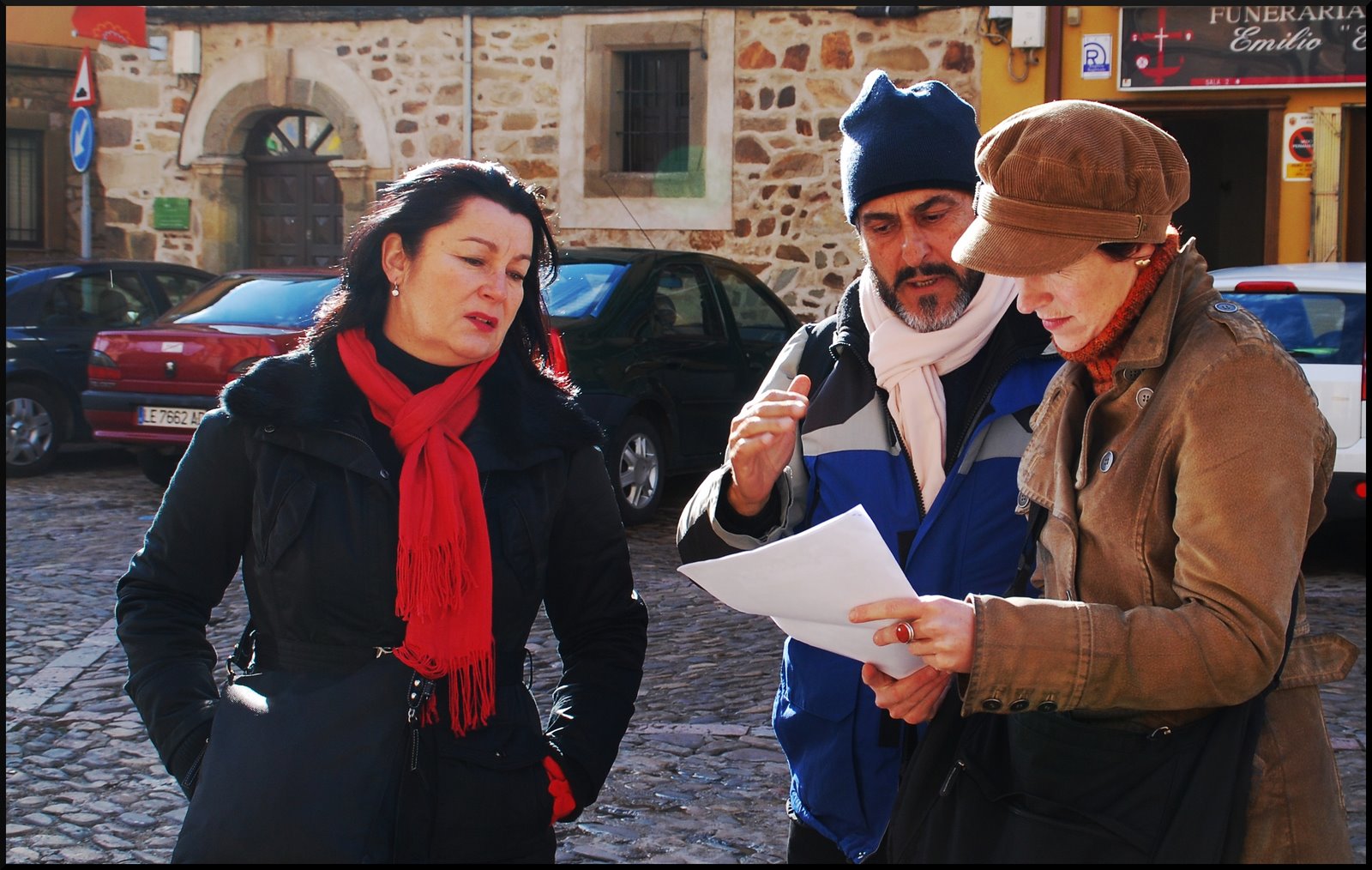
We had a non-walking trip with the walking group to Astorga, a pretty little city high on the plain in León. It's cold there in winter, blazing hot in summer, but it's famous for its buttery cakes and pastries and this backwards menu. We wandered, looked at Roman ruins, had a glass of wine and generally ambled around. Then we got on the bus to head to a village called Castrillo de los Polvazares, all red sandstone and cobbled streets.
The first dish was then meat (basically all your boiled meats... beef, ribs, lamb, salty ham and the gelatinous stuff... ) then chickpeas with cabbage and finally soup, although I was a bit disappointed that the old Spanish soldiers didn't go the whole hog and start with coffee and a spirit.
I have now digested the meat... although it did take a couple of days.
