22 August 2009
"Well, M. Aronnax," replied Captain Nemo, "we are in that Vigo Bay; and it rests with yourself whether you will penetrate its mysteries."
 I didn't know much about Vigo. Truth be told, I still don't. But here is a short summary of things we learned in the last week.
-The bus journey is long and easy and you go via the major cities in Asturias and Galicia (7.5 - 8 hours).
-You can get a clean comfy room in Hostal Las Cíes for €25 a night.
-Money saved on accommodation is well spent on food.
-The Guardian includes Rodas beach on Islas Cíes in its list of the top ten beaches in the world.
-The Guardian seems to be right (not having been to all of the beaches in the world for comparisons). The sand is smooth and soft, the water crystal clear (and chilly). The only way to get there is by boat, so it's not too crowded.
-Nudists seem to be exclusively German. There's a nudist beach there, open to the clothed too. Everyone who sported the bare look seemed to speak German.
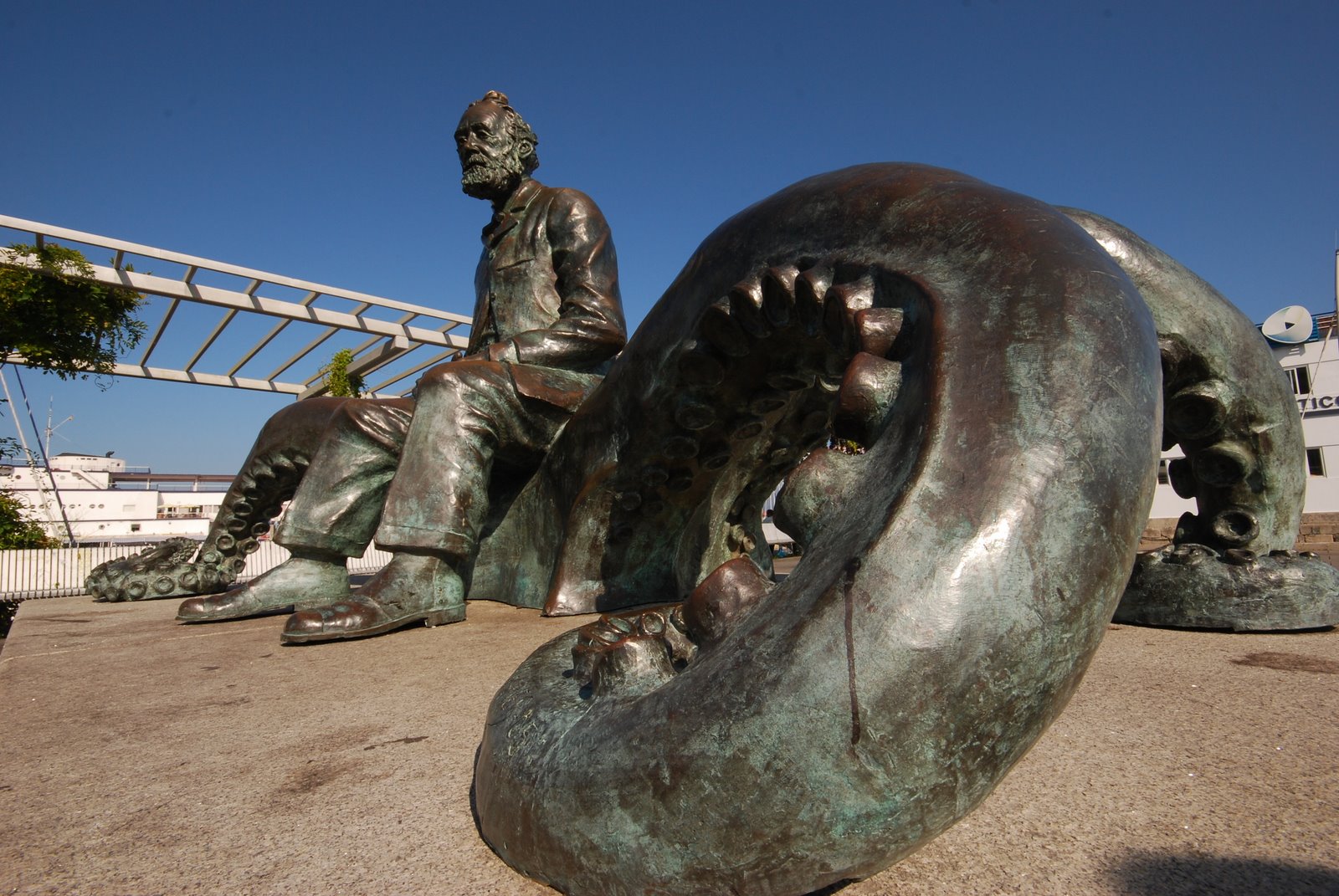
-Jules Verne is immortalized on an octo-couch because Vigo is mentioned in 20,000 leagues under the sea.
-Galician food is rather nice.
-Octopus every day is a possible diet.
-You can have a good three course lunch, with wine, bread and coffee, for €8.
-A single cruise ship disgorging its English passengers is pretty obvious.
-We'll return to this neck of the woods for a couple of reasons; one, the roads are being dug up all over the place, we want to see it when it's finished; two, a few days camping on the islas Cíes will be a bit special.


16 August 2009
The stroll, day four: Llames de Parres to Covadonga
 25km, 700m ascent, 500m descent.
We left the Albergue at a reasonable hour, and walked along through deserted villages (deserted because they were in the middle of a two day fiesta and were presumably sleeping before the finale of a massive hot chocolate later that day) until we were diverted along a riverside path.

The quality of the paths was a bit better, largely because it was used by the pilgrim route from Gijón as well as the one from Oviedo and that one is a little shorter, less mountainous and more popular. We eventually came out onto the main road between Arriondas and Cangas de Onís and followed the roadside path for a while. That felt a little weird, to be on such a busy road, after having walked for a few days through rather empty countryside (we had seen exactly no other walkers in the previous three days, except at the albergue. All the people we had seen had been working).
Cangas de Onís was a shock too, we had a coffee and watched the hundreds of tourists wandering round, taking pictures in front of the romanesque bridge and the cider pourers.
We left the city and headed up the hill to the south of it past the chapel of St Anthony of Padua, which was behind a grassy square lined with big oaks. We passed the cemetary, one end of which was a building site, making space for the future. It was hot and steep, the path alternated between being a dirt track and a concrete one with the diagonal lines cut into it to give some grip/let water run off. Julio pointed up at a concrete circle above us and said that it was only hard up to that.
We reached the circle, which was a small reservoir, about 25 feet in diameter and 10 feet high, like a lonely swimming pool, surrounded by horses with bells around their necks.
The views became more spectacular as we traversed easy tracks and gazed off down into the steep valleys with the old roads south to Leon. We passed little cabins and farm buildings and a statue erected in honour of shepherds (looked suspiciously like it had been nicked from a B&Q gnome display and put on a posh plinth).
Eventually we started going down, and, apart from one brief section where the path disappeared and we had to thread our way through rocks and spiny plants, we had no problems.
We finally found a gate and once we were through Julio said that was it for the mountains. We followed a track down to a road and hopefully a bar and a fountain. As we neared the town we were overtaken by the bread man who kept stopping and putting the bread in the bags hanging on people's doors. We admired the plants growing on one house and the old lady insisted that Liz take some cuttings of her plants. A bit further on we found the bar... only identifiable by the crates outside. We went in and asked for shandy (a clara) and a tapa of cheese... the lady looked a little doubtful, there was no bread, she said. Ahh, but we know the bread man's been, we said. Whereupon it was all okay and she put out a plate of Gamoneu cheese, which was rather nice. She was a bit surprised to have a couple of English folk in her bar... at one side of it was her sewing machine and piles of cloth. A neighbour was having a glass of something at the bar but she left. Apparently there used to be signs to the bar but vandals had torn them down.
We filled our water bottles at the lavadero (the old public laundry house, all over the place here) and continued our descent. Which seemed to go on for ages until, through the trees, we saw the twin towers of the church in Covadonga and heard the complicated peal of the 5:45 bell. Julio stopped and put on a fresh t-shirt and changed his socks (we didn't) and we marched down to the tourist throng.
Covadonga is the supposed site of the beginning of modern Spain. The military commander Pelayo won a battle here that is credited with starting the reconquest and the end of moorish Spain. There's a statue of Pelayo, and an imposing church on the hillside, and a shrine to the virgin of Covadonga (who is dressed in what seems to be a carpet, giving her the shape of an inverted cone of chips).
We toured, we walked through the shrine, we didn't buy mini-virgins, or pictures or postcards. We didn't drink the water that comes out of the side of the cliff under the shrine.
Then it was on to the bus and off home, via a couple of ciders in Cangas and dinner in a cider house in Fuensanta.
14 August 2009
The stroll, part 3: Espinaredo to Llames de Parres

 22km, 1100m ascent 1200m descent.
We had breakfast in the cafe Venezia in Infiesto and looked at the weather forecast. Rain and cloud for the next few days. Julio said that this stage would have had the best views and with the cloud level at about 300m we decided to postpone the walk for a couple of days so we took the FEVE back to Oviedo...
...We arrieved back in Espinaredo at about 8am on Sunday and set off. There was still cloud and a bit of rain but the forecast was reasonable so we paused under hórreos and the eaves of cabañas as we slowly weaved up the hillside, hoping to arrive at the top after the cloud had left.
The rain in summer means that the plant life is, shall we say, vigorous. While we were walking up wide tracks it was no problem but as the tracks got narrower we had to fight our way through a bit more.
The hills here are a bit steep, and you can see tracks (often animal tracks) that seem close, and think oh, it's not far, and then you have to contour around and it's actually quite a way. I was in front and got soaked, threading through big ferns and trees that had grown over the path. It had stopped raining but each bush had a big charge of water waiting to dump on me if I forgot to give it a good whack with my pole.
Julio walks with a wooden bastón, it's a walking stick with a solid steel ferrule on the end. Handy for whacking at gorse and bracken and plants with spines. He's had it ten years or more but when he tried the two pole style he seemed taken with that.
We threaded our way through the peaks, maintaining our altitude until we reached the coll we were heading for where we had a break and Julio pointed out our next stretch.
It was a descent but without a path, which had become too overgrown to pass. As we descended we were faced with ferns and bracken and gorse, and in the places we could pass there was a ton of mud. We got down to the cabaña we were heading for (the one with a cow's skull on the side) and headed down to the river.
Which was rather higher than expected. It took a while to find somewhere to cross, Julio almost lost his stick to the river but we made it across. Of course after you cross a river you have to go up the other side, and that was quite steep too... but then, what isn't steep around here.
Lunch up at the top (at around 4pm) and a long easy way down on recently improved tracks, until we had to leave the nice wide track for our path, which was much less obvious but did take us past a massive old oak tree.
When we finished the fifth stage (of the seven stage version) Julio pointed up to a chain of peaks and said, we just have to go over that and we'll be at the albergue.
 From a distance it looked smooth and green, and put me in mind of grassy english lakeland peaks.
From a distance...
Up close the Sierra de Bodes is murder in summer. The 3km ridge of peaks is covered with gorse, ferns and trees. The gorse is hidden under waist to chest-high foliage so you end up just walking through it. All three of us were reduced to yelps and squeals as our legs got more and more raw.
Then the path kept disappearing... so we had to wade into the higher, denser stuff to find it again. This all took time and we were starting to worry about the daylight.
Eventually we began descending, but still through the horrible scratchy stuff. Apparently it's much less problematic in winter. The last stage involved hacking through a little valley of the stuff that was over our heads to reach a path... which we did with a fair amount of relief and a sense that we'd been flayed

At around 10pm we reached the albergue (youth hostel) where the guys had been forewarned about our late arrival. That meant that after a shower we sat down to a big bowl of sopa de ajo (garlic soup: garlic, cayenne pepper, bread and water) followed by sausage egg and chips (or chorizo, huevo frito y patatas: either way, perfect food for a walking day) and rice pudding.
We treated ourselves to a couple of chupitos as well. We deserved something after the day's exertions.
12 August 2009
The stroll, part 2: Alto del Espinadal to Espinaredo
 27km 1050m ascent, 980m descent.
 So at 8am we left El Titi and wandered down through more empty lanes with the sounds of cowbells and cocks crowing and territorial hounds barking for all the were worth. We passed through little villages where one or two of the farm-style doors were open and craggy women in blue flower print pinafores peered out.
It was misty and cool but as soon as we crossed the river and began to climb we hit the sun and the hats came out (well, not for Julio, he's apparently impervious to the weather).
The track climbed for a good 6k, all of it steep, requiring a few stops to admire the views, say hello to cows, catch our breath, sweat a bit... that kind of thing.
After a couple of hours we reached the crest of Les Praeres. Julio had mentioned that there was a bar there but a phone call the previous evening had let us know it would be closed. Up at the top (at about 600m) there are a dozen or more cabañas, holiday cottages and the bar opens for them at weekends. So, without coffee, we drank water and ate our tortilla sandwiches (basically an egg and chip butty, but with less bits to fall out). It's a set of meadows up there, very much a working area despite the lovely cottages. We watched a lorry pull up and the men inside take away a few calves, causing the mothers to get a bit irate.
From the meadows at the top, we had a track all the way down, and we only really stopped to bathe our feet in the river. Which was cool and lovely, very necessary.
Then it was downhill all the way into Puente Miera, where the bar was where we would have had lunch had it not been closed down. So without a pause Julio pointed up a small track and said 'pa' arriba' (upwards). Another steep climb, this time up wooded tracks, like the cobbled paths leading up and down the hills in Yorkshire. These were in a little worse state of repair though.


Julio sets a good pace in front, especially going uphill. We went up a path which was pretty muddy and densely forested but he didn't want to stop until we were out of it. I heard his glad yell of 'cabaña' as he reached the hut that marked the end of the hard part. A few minutes more up and we were at another meadow, where we polished off the remainder of our tortilla sandwiches (the guys at El Titi had made us a couple each).
We still had more up to do though, until we reached the summit pass, where there were the ruins of a chapel overlooking the valley we would be decending into. The ruin was not much more than a couple of walls and we sat in silence for a while watching the clouds come down a bit. Not quite as far as we were but enough to limit the view.
Then down another track into Espinaredo, another couple of hours. In the town they were preparing for their fiesta, which meant there was no accomodation. We'd decided we'd get a taxi to Infiesto (the nearest reasonably sized town) and while we were looking for a taxi number a couple of guys offered us a lift in their Land Rover. They'd been working in the hills, recording the limits between public areas and private. We stuffed ourselves into the car and rattled along to Infiesto listening to their strong asturian accents (where everything that ends in 0 suddenly ends in u).
In infiesto we showered and then went for a wander to choose somewhere to eat... Julio had a hankering for picadillos (imagine the contents of a chorizo, as mince) and tortos (fried corn bread)... we settled for picadillos and potatoes, and cider, of course. Later, over an orujo in the bar associated with the hotel, we looked at the weather forecast... where a big dollop of cloud and rain looked set to make the next day less than fun.
The stroll, part 1: Oviedo to Alto del Espinadal
 35km ascent 530m, descent 520m
A month ago Julio had mentioned that he wanted to do the GR105 (Gran Recorrido, big route), also known as the Rivayagüe (after the name of the walking group that set the route up... now known as Grupo Naranco, the group we go walking with). I passed on the mention to Liz, who said 'let's do it' so last Tuesday at 6:15am we left the house and started walking to Covadonga (a total trip of 107km). The route is normally done in seven stages but we planned to do it in four by doubling up some of the stages and walking all day.
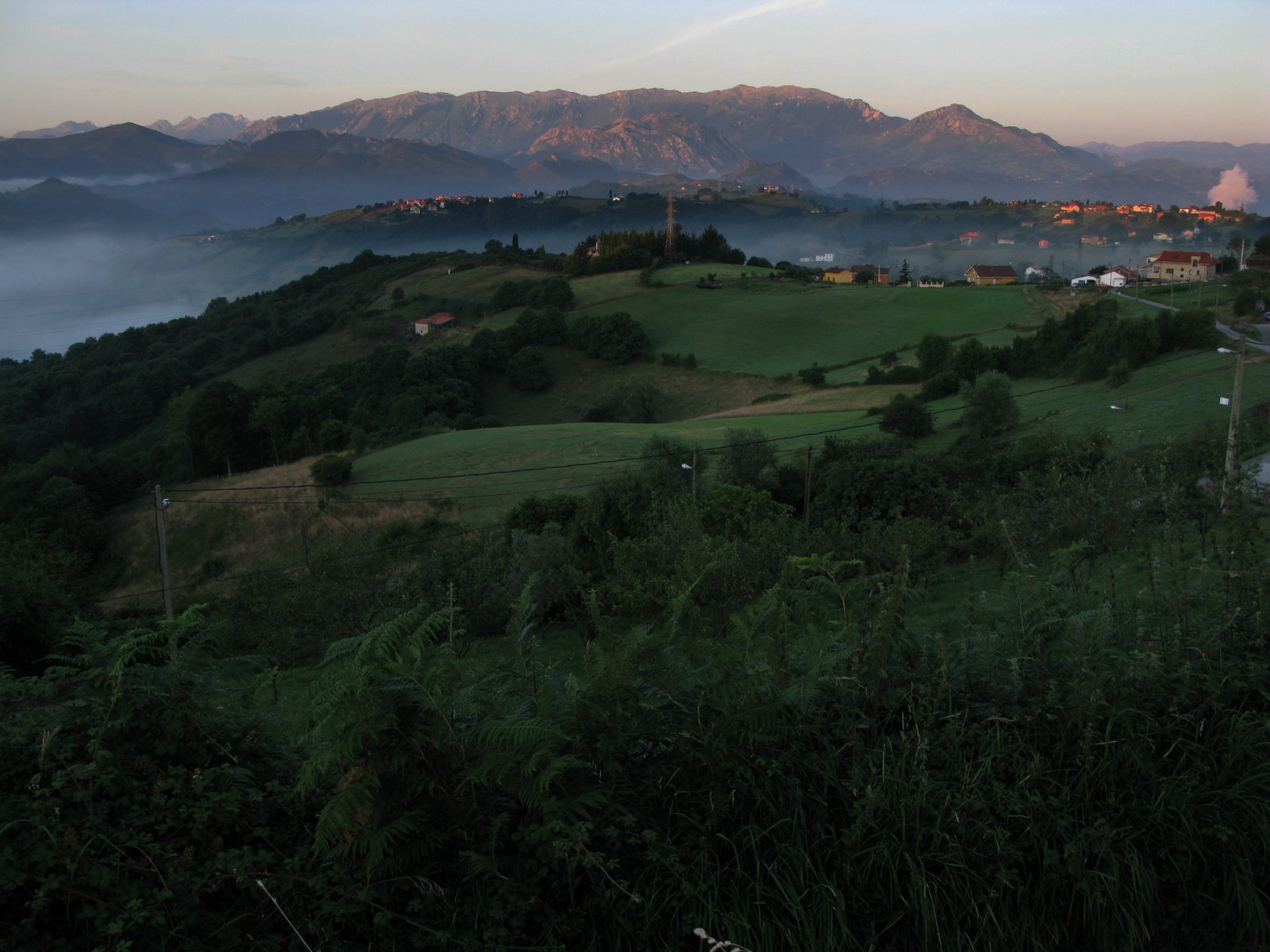
It was dark when we set off and after half an hour we reached the village of Covadonga (okay, four houses and a sign: same name as our ultimate destination but really the beginning of the route). There's a little chapel there which is the real start. The sun began peeping over the hills to the east and we had a fine view of the Aramo range to the south (in the photo)... we'll be walking over that in a couple of weeks too.
Just to the east of the city there are lots of low hills and it is like walking along country paths in the UK, maybe a little more overgrown because of the combination of a few more degrees of heat, and the same amount of rain. I've never seen nettles south of the Cantabrian mountains but they're all over the place here. We strolled along wide paths and tracks, and by about 11am we'd finished the first stage (of the seven stage version) and were all set for something to eat.
A couple of hours later, after one wrong turn and a kilometre along the main road to regain the path (where there were hundreds of tiny lizards basking in the hot sun scampering out of the way as we came) we came up the hill to the village of Lamuño. We happily shucked our backpacks off and had a cider shandy (too hot for just alcohol). The landlady was wiping the counter top and Julio asked if she could make us something to eat... a tortilla or something... oh yes.
We lounged in the shade of some trees outside the bar while the landlady did her stuff in the kitchen and kept coming out to help Julio get a phone signal and chat. And had more cider shandy (cider with casera, which is the Spanish version, and much like ´normal´ lemonade in the UK... when it's hot you often hear people asking for wine and casera... which sounds like heresy, until you taste the wine on its own, then you realise you have to put casera in it sometimes).
We wolfed the tortilla when it came, warm and oniony with the tiniest flecks of chorizo giving it some additional flavour. Then we had blue cheese and dulce (quince paste) and a bit more cider shandy.
Reluctantly we re-shouldered the packs (plomo, said Julio - lead) and continued. Similar paths led us to a recreation area on top of a hill a couple of hours later and we stopped to take in the views and the sun. Then we descended into Basoredo in Alto del Espinadal about an hour after that. We were staying in Hotel-restaurante El Titi (no sniggering). Julio taught us a couple of card games as we waited for the restaruant to open (at 8:30pm) then we ate and had an early night. The only problem was, when we asked about breakfast (planning to be up at 7 and away at 7:30) the staff said there'd be someone up and about to get breakfast at 9am so we asked them to make a few sandwiches. They brought a bag of tortilla sandwiches (it would keep the bread from going dry). Then it was off to our rooms (ours had a dormer window about eight feet up, with a strange bench on a shelf arrangement so you could watch the mountains. Julio had pointed out our path for the next morning, up... up into the mountains in Piloña.
02 August 2009
A tale of two weekends.
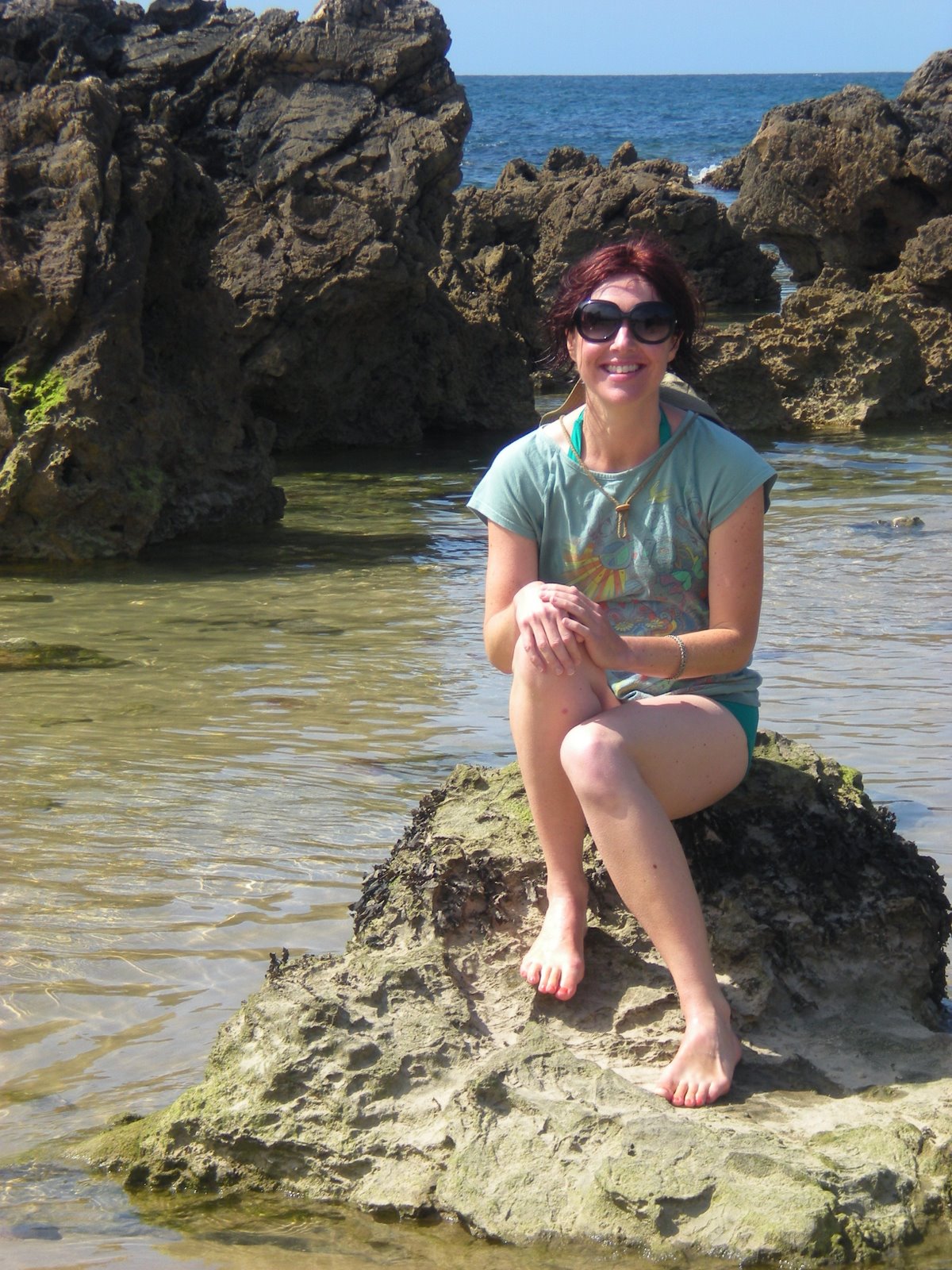 It was the best of weather, it was the worst of weather.
Okay, not quite best and worst but there was a bit of a contrast between last weekend and this weekend here in el paraiso natural.
Last weekend Pompeyo and Carmen took us to the beach at Barro, which is a beautiful rocky cove with a wide sandy beach. We stayed at one side for two reasons; it was quiet, and it was next to the chiringuito (the beach bar). As we plodded down the steps to the sand we reserved a couple of the at-that-time-raw chickens and proceeded to do beachy things while the chickens roasted.
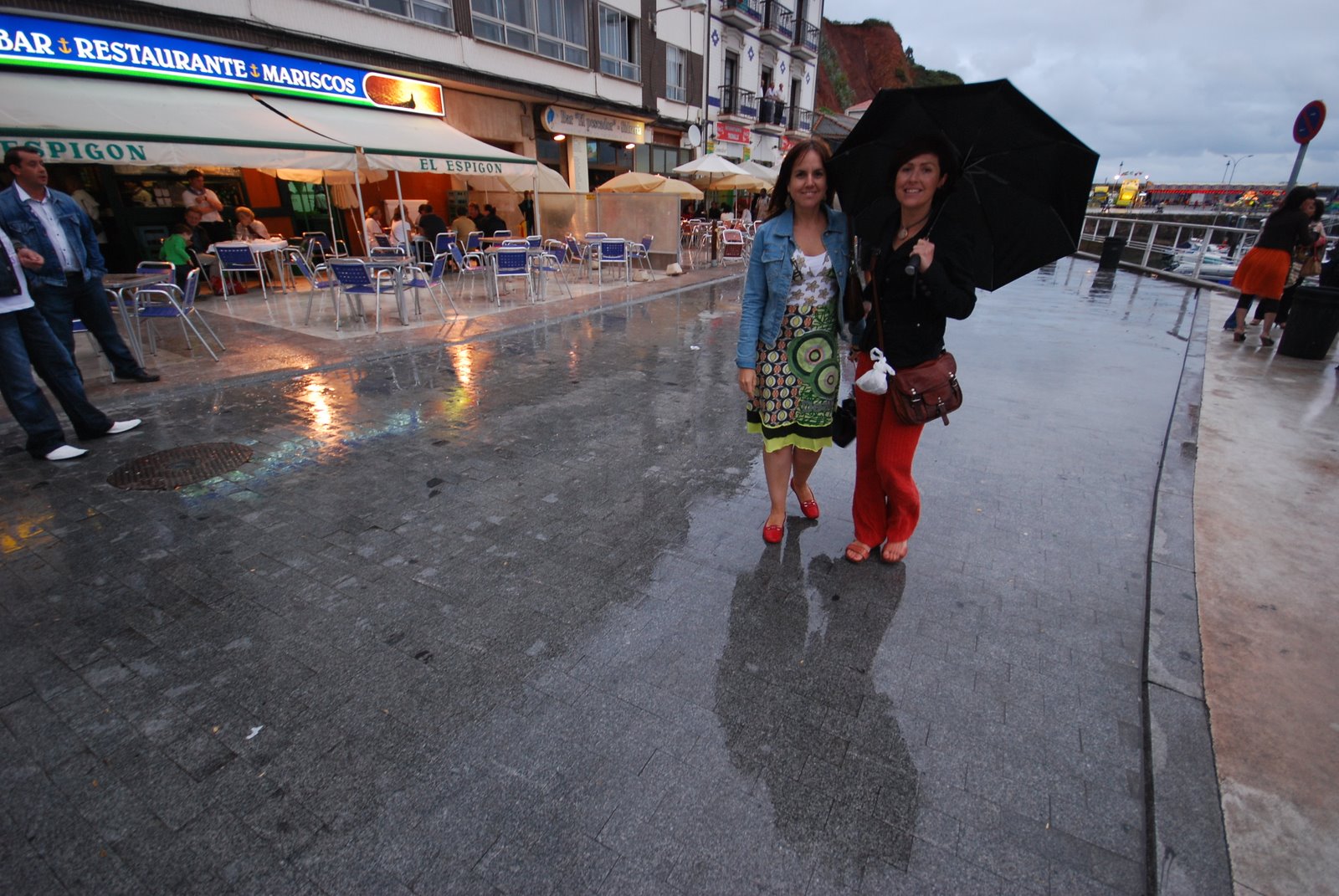
Liz, as you can see from the photo, had delusions of mermaidery but we coaxed her off her rock with the smell of roasted meat.
This weekend, well, it was very... um... British. We went with Maria Jesús to Gijón to have a look at El Laboral, the biggest building in Spain, according to Wikipedia (which is never wrong). It was... underwhelming... big but big like a fat kid rather than a basketball player, a fat kid who bullies because he's really insecure (at least that's what the mid 20th century let's-make-it-big-for-Franco style of architecture suggested to me).
After that we went to Candás, for the sardine festival (the one we went to last year, where we sat on the grass in the hot sun and got very drunk). This year people were displaying a Dunkirk spirit, huddling under the sports centre roof to eat their grilled fish and baroña (corn bread).
